How Regional Player Habits Shape Roulette Reward Accessibility in Localized Gaming Markets
Clara Jung · Aug 13, 2026

How Regional Player Habits Shape Roulette Reward Accessibility in Localized Gaming Markets
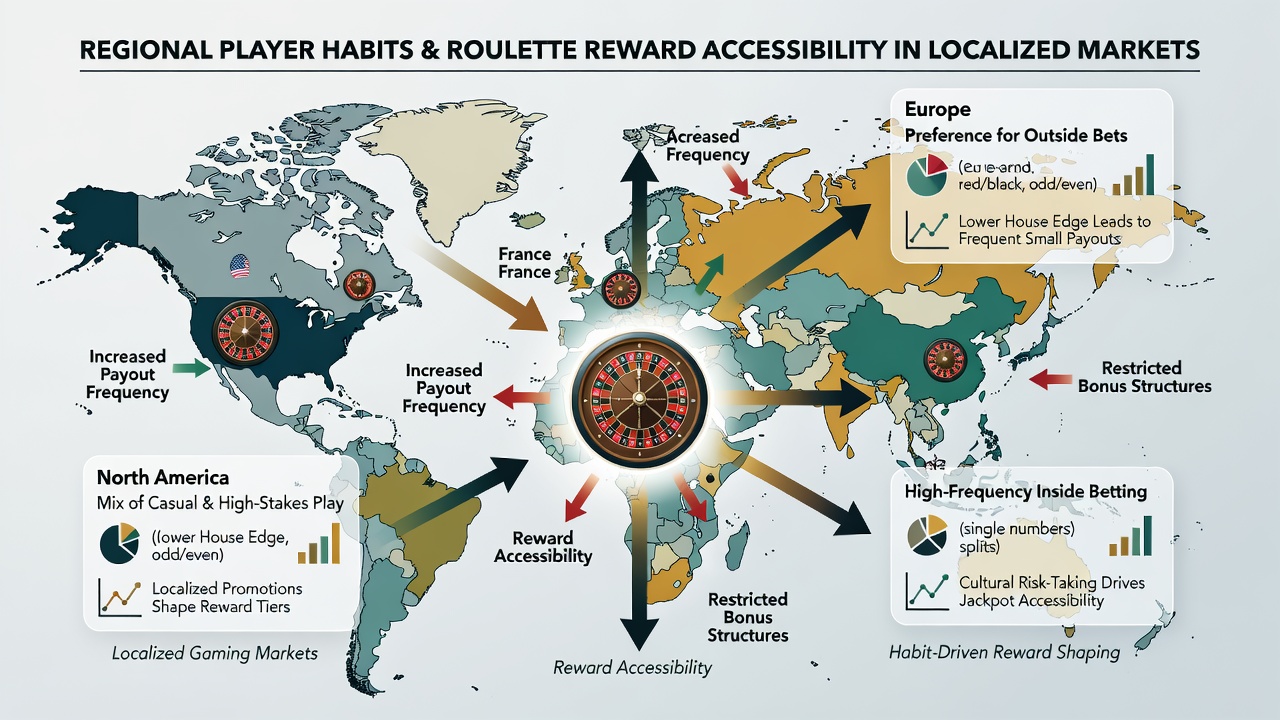
Player habits in roulette vary sharply across regions, and these differences directly influence how rewards become available in each localized market. Data from multiple jurisdictions shows that preferences for game variants, playing times, and device types lead operators to adjust bonus structures, cashback rates, and deposit conditions accordingly. In markets where participants favor European roulette with its single zero wheel, reward programs often emphasize lower house edge play and extended session bonuses, whereas regions dominated by American roulette double zero variants see more frequent reload offers tied to higher volatility tolerance.
European Market Patterns and Reward Timing
Observers note that European players tend to engage during evening hours aligned with local television schedules and social routines, prompting platforms to schedule time-limited roulette incentives that activate between 8 PM and midnight CET. Figures from the European Gaming and Betting Association reveal that 62 percent of roulette sessions in this region occur on desktop devices during weekdays, which has encouraged operators to tie no-deposit rewards to longer verification processes that favor account stability over instant mobile access. Those who study cross-border data find that loyalty tiers accumulate faster for players who combine live dealer sessions with table minimum adjustments, because regional regulations in several EU countries require explicit wagering contribution caps on roulette to protect slower-paced recreational users.
Asia-Pacific Variations in Device and Session Behavior
Research indicates that Asia-Pacific participants often play in short bursts on mobile devices during commuting periods, leading platforms in markets such as Australia and Singapore to structure instant cashback offers that trigger after 15-minute sessions rather than full evening commitments. A report published by the Australian Institute of Family Studies highlights how these fragmented play patterns result in reward accessibility being gated behind quick verification steps and lower minimum deposit thresholds compared with European counterparts. Operators adjust contribution rates on roulette variants accordingly, allowing regional players who prefer rapid spin cycles to reach withdrawal thresholds without extended time commitments that would clash with daily schedules.
North American Regulatory Influences on Habit-Driven Rewards
In North American jurisdictions, state-by-state rules interact with documented player preferences for weekend high-stakes sessions, which shapes how casinos distribute reload bonuses and tournament entries. Data compiled by the Nevada Gaming Control Board shows that roulette activity peaks on Friday and Saturday evenings, prompting localized promotions that cap cashback percentages at higher thresholds for players who exceed 200 spins within a single day. Those analyzing retention metrics across borders observe that Canadian provincial markets, with their emphasis on responsible gaming pauses, often restrict reward escalation paths until players complete mandatory session time checks, a direct response to habits that include longer continuous play blocks than seen in mobile-dominant regions.
Device Portability and Reward Pathway Adjustments
Portable device usage correlates strongly with reward design in emerging markets. Studies from the University of Nevada, Reno demonstrate that regions with high smartphone penetration see roulette incentives delivered through app-exclusive push notifications, while desktop-heavy markets retain email-based bonus codes that require manual entry. This split affects accessibility because players in high-mobility areas complete wagering requirements through shorter, repeated sessions that accumulate points toward tiered rewards more gradually than the consolidated play common elsewhere. Operators respond by calibrating contribution percentages on specific roulette variants to match these session lengths, ensuring that reward pathways remain viable without encouraging extended continuous play.
Legal Frameworks and Cross-Regional Reward Distribution
August 2026 data from multiple regulatory bodies shows continued divergence in how localized laws interact with habit data. Markets in Latin America, where players frequently combine roulette with social betting circles, have introduced group-linked reward multipliers that only activate when multiple accounts from the same geographic cluster reach combined wagering targets. Meanwhile, stricter time-zone alignment rules in parts of the Middle East limit bonus activation windows to evening hours that match regional prayer and work schedules, directly limiting access for players whose habits fall outside those windows. Industry reports confirm that these adjustments maintain compliance while reflecting documented behavioral clusters rather than uniform global templates.
Conclusion
Regional player habits continue to drive precise adjustments in roulette reward structures across localized markets. Evidence from regulatory filings, academic studies, and industry datasets demonstrates that operators calibrate deposit thresholds, cashback caps, and contribution rates to align with documented preferences for game variants, session timing, and device choice. These adaptations maintain accessibility within each region while respecting local legal constraints that differ substantially from one jurisdiction to another. As player data collection expands through 2026 and beyond, reward pathways are expected to grow even more segmented according to the specific behavioral patterns observed in each market.