How Algorithmic Personalization Shapes Access to Table Game Incentives in Fragmented Digital Markets
Sam Brooks · Aug 4, 2026

How Algorithmic Personalization Shapes Access to Table Game Incentives in Fragmented Digital Markets
Algorithmic personalization now determines which table game incentives appear for individual users across digital platforms, and these systems process player behavior data to adjust offers in real time while fragmented markets create separate rules for each region and operator. Platforms collect details on session length, game preferences, deposit patterns, and device type before feeding that information into models that predict which incentives might increase engagement for blackjack, baccarat, or poker variants. Those models then generate customized reward structures that differ sharply from one account to the next even when users operate in the same geographic area.
Data Inputs That Drive Personalization Engines
Operators feed multiple data streams into these engines, and location signals combine with historical play metrics to set incentive parameters such as deposit match percentages, cashback rates, and free-play allocations for table games. Research from the University of Nevada Reno Gaming Innovation Center shows that session frequency and average bet size rank among the strongest predictors of which bonus tiers a player receives. Time-of-day activity also influences outcomes because models learn that certain users respond better to late-night promotions while others engage more during daytime hours.
Device portability adds another layer since mobile sessions often trigger different reward paths than desktop logins, and studies indicate that cross-device players encounter more frequent incentive adjustments as algorithms attempt to maintain consistent engagement across environments. As of August 2026 many platforms have refined these models further to account for regulatory changes in several jurisdictions that limit the types of data allowed for personalization.
Fragmented Market Structures and Access Disparities
Digital markets remain divided by licensing regimes, payment restrictions, and platform policies, which means the same algorithmic logic produces unequal results depending on where an account is registered. One player in a European jurisdiction might see table game incentives tied to loyalty tier progress while another in an Asia-Pacific market receives offers based solely on recent loss recovery metrics. These differences arise because local rules dictate what data operators can collect and how they may apply it to reward calculations.
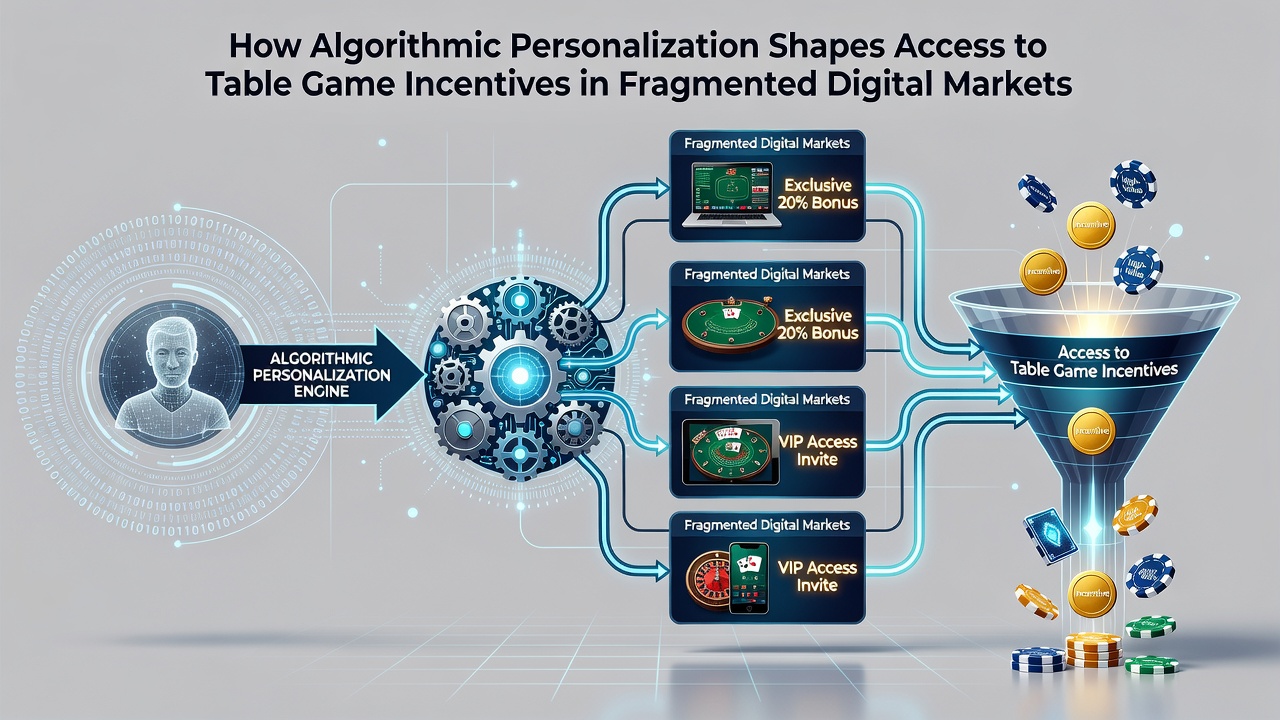
Observers note that operators in highly fragmented regions often maintain separate model versions for each license, and this practice leads to situations where two accounts with nearly identical play histories receive entirely different incentive packages. A 2025 report from the Australian Communications and Media Authority documented similar patterns across licensed platforms operating under distinct state frameworks, highlighting how personalization algorithms adapt their outputs to comply with varying compliance requirements.
Effects on Player Retention and Offer Visibility
Retention data collected across multiple platforms reveals that personalized incentives can increase repeat table game sessions by measurable margins when the offers align closely with individual patterns. Yet visibility remains uneven because some users never encounter certain promotions simply because their data profile falls outside the parameters the model uses to surface those offers. This creates pockets of players who receive frequent escalations while others see only baseline incentives despite similar activity levels.
Industry reports from the European Gaming and Betting Association indicate that operators have begun testing transparency tools that let users view basic categories of data influencing their offers, and early results show modest increases in perceived fairness among participants. These tools do not reveal proprietary model weights but they do list factors such as recent game selection and deposit frequency so players can understand broad reasons behind the incentives presented to them.
Regulatory Responses Emerging in August 2026
Regulators in several markets have started requiring disclosure of algorithmic criteria used for incentive distribution, and these mandates aim to reduce opaque access barriers that arise when models operate without oversight. Platforms must now document how data inputs translate into reward eligibility in some jurisdictions, which forces adjustments to previously hidden personalization logic. Compliance teams report that these requirements have prompted operators to simplify certain model features while retaining core predictive capabilities.
Cross-border operators face additional complexity because they must reconcile differing disclosure rules across licenses, and this has led to the development of modular systems that can toggle specific data fields on or off depending on the active jurisdiction. Data from academic analyses of these modular approaches suggest that retention metrics remain stable even after such modifications, indicating that core personalization functions can persist under tighter regulatory conditions.
Conclusion
Algorithmic personalization continues to reshape how table game incentives reach users in fragmented digital markets by processing behavioral and contextual data into tailored offers that vary across accounts, regions, and devices. Regulatory developments through August 2026 have introduced new documentation requirements that affect model design without eliminating the underlying mechanisms. Players encounter different incentive landscapes depending on their data profiles and the licensing environment of each platform they use, and these patterns are expected to evolve as operators refine their systems to meet both compliance standards and engagement goals.